The Likeness
of Being Joan
Prologue
Discovering Mary
In the fall of 1960, I was an altar server at my grandfather’s funeral mass in St. Agnes Church. Two months later, my parents, two brothers, sister, and I stood in Holy Cross Cemetery on a thin layer of early snow. A monumental mason had engraved Peter Dolan 1897 – 1960 into a three-foot-high, three-foot-wide slab of polished gray granite, just below Mary McCarthy 1873 – 1941.
Mimicking my parents, I bowed my head, closed my eyes, and said a Hail Mary, punctuated with the obligatory Amen. I was done. I assumed everyone else was done. I peeked. My siblings and parents stood, eyes closed and hands folded in prayer. The cold penetrated my galoshes, shoes, and socks. I glanced around, ensuring no one caught me without a prayer, violating an unknown creed of the dead. My eyes stopped at the five syllables, Ma-ry Mc-Car-thy. It was strange. My mother’s stories never included a Mary or McCarthy. There was a Vetter. That was my Nana’s maiden name, Lillian Vetter, which sounded odd. It wasn’t Irish, and she was Nana.
My father opened his eyes. He glanced at me, winked, and put his index finger to his lips. I presume he, too, noticed the five-syllable mystery. I reached out to tug his coat. My mother’s eyes were shut, her face stern, and her silence commanded me to stop. My hand dropped, and my father shifted his weight from one foot to another, the snow crunching. My mother opened her eyes and stepped onto the grave. I thought it was a sacrilege, stepping on a grave, waking the dead. She moved with dignity, knelt in her Sunday dress, and straightened the pine wreath she had placed at the foot of the headstone when we first arrived. She stood, slipped her arm under my father’s, and they walked to the roadway perpendicular to the rows of gravesites. My brothers, sister, and I trailed.
As they stepped onto the roadway, my curiosity crashed through the morning’s gravitas. “Mom, who’s Mary McCarthy?”
“Oh, a relative. You don’t know her.” She said dismissively.
My father grabbed my hand and led me away, the remainder of the family following.
Several years later, my mother sipped her cold tea while smoke twirled from the tip of her Kent. My father was at work. “Did you know that your great-grandmother was married to a bigamist?”
“No.” I was seventeen. It was a bit of esoterica she dumped on me occasionally, and I knew from experience she expected me to be shocked. I wasn’t. My great-grandmother, identified only as Mamie, was born a blur from a single story.
“Well, she was. Herman Vetter was his name.”
She behaved as if her revelation secreted shame. That was it. Story over.
This semblance of a nana lived with my mother’s family during the First World War and the Great Depression, and until the telling of the bigamist, my mother had one story. My grandfather returned from work with two copies of the Brooklyn Daily Eagle, one for him and one for her grandmother. He instructed her brothers and sisters not to touch Mamie’s copy. That was the beginning, middle, and end of Mary McCarthy’s story until the day my mother added her two-sentence revelation.
The mystery of Mary and Herman haunted me for decades. My mother was diagnosed with esophageal cancer. Her oncologist appointments at Memorial Sloan Kettering Cancer Center and Stamford Hospital were two weeks away. I wanted to close the gap between my mother and me, which had been expanding for forty years. After spending days reading poor reproductions of newspapers from a Brooklyn Public Library online archive for mention of Mary McCarthy, Mary Vetter, or Herman Vetter, I found it.
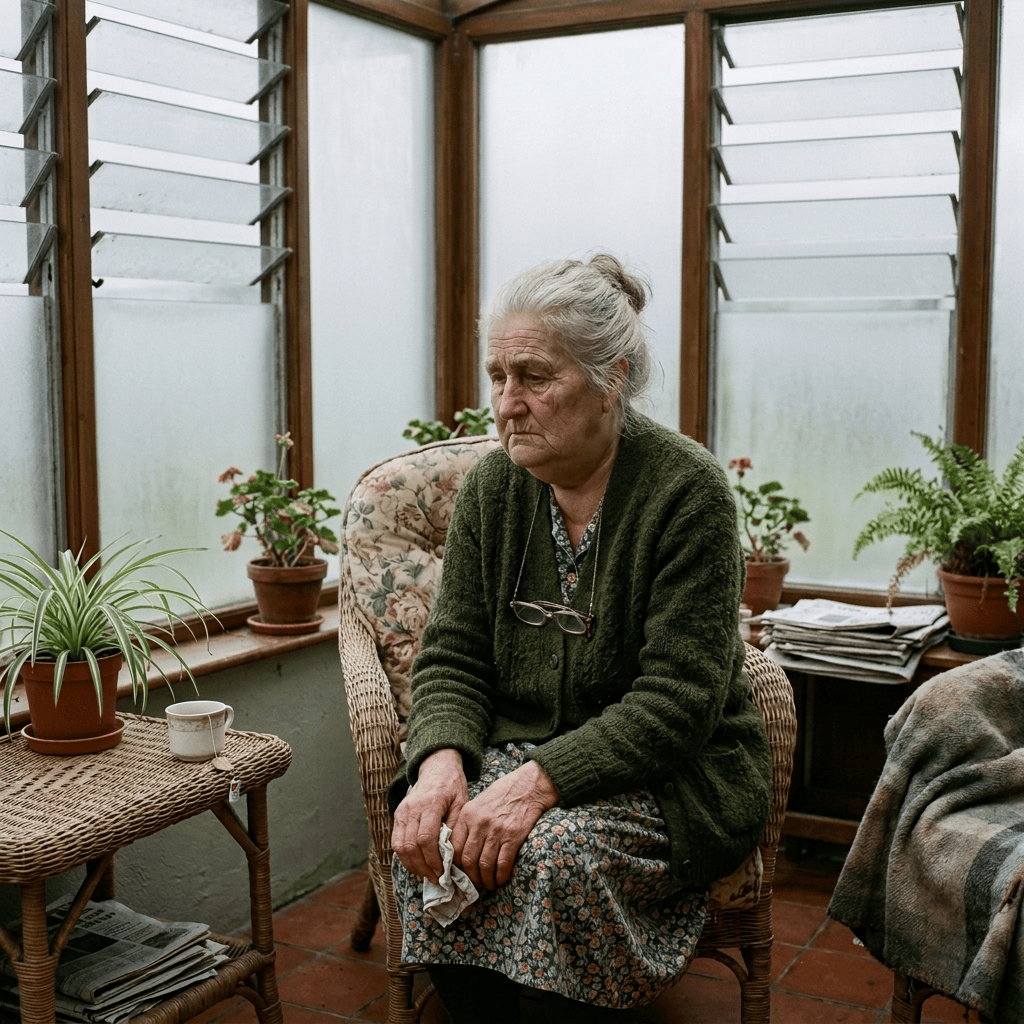
My mother was sitting in the sunroom of her Stamford home, fifty miles and eighty years away from the Brooklyn of Mary. The house was the same distance from an inlet called Holly Pond as Mary’s apartment was from the Gowanus Canal.
I let myself in through the unlocked garage. There were pleasantries, questions, and answers about how she felt, and finally, I said, “I found a story about Herman Vetter and Mary McCarthy.”
“Where, where?” It was the first time in many weeks I heard excitement in her voice.
“Brooklyn Eagle,” I said, using my mother’s name for the paper.
“Where, where?” She looked at the piece of paper in my hand.
I handed her the printout. “It made the front page, above the fold.”
“What does it say?”
“Read it. It’ll surprise you.”
When she finished reading, she said, “Thank you.” It lacked gratitude. I walked into the kitchen. I expected a different reaction. It was so much more of a story than she had told.
When I returned to the sunroom, she was asleep.
My mother was dying, but neither she nor I knew.
I did know I hadn’t liked her for years. That I loved her. That I was obligated to her. The old woman sleeping in the afternoon sun was nothing like the mother I knew. That woman vanished decades ago. As I stared at her, I wondered who was she. How did she come to be two distinct and distant people?
Her salty black hair curled. Her broad nose put distance between her two brown eyes, hidden behind her eyelids. Her dark, Irish skin had wrinkled. Images of Lillian and the Mary I conjured floated across her face. Each similar to the next, flashing faster, the three images became indistinguishable. Spinning quickly, becoming one.
There it was. My mother was of Mary and Lillian. The struggles, work, and God of these three women coalesced. My mother’s story thus begins with the woman whose story she cheated.
Mary confronted Herman more than 125 years ago. I was never in her thoughts, and she was never in mine. I didn’t know she existed for the longest time. I wonder what I would have thought of her and her of me. I’ll never know, and I sometimes feel I’ll be the worst for it. More to the point, I don’t know, nor will I ever know, how her plight affected Lillian and my mother.
I’m no longer a child, no longer relating to the memories of a child whose lenses seek comfort and protection. I see the events of the three women through the eyes of an old man. I lived these events, well, most of them, as an adult with an adult’s memories, seen through an adult’s prism. That is how the rest of the story will go, and I don’t know how it will end.
Part One
Mary
(McCarthy Vetter)
(My Great Grandmother)
Chapter 1
Sixteen Bits a Week
Mary and Lillian Vetter lived in a small, second-floor apartment at 130 Smith Street. It was a Brooklyn neither my mother nor I knew. Frigates, sloops, paddle wheelers, and steamships sailed up to the docks along the Brooklyn shoreline. Ferries clotted the Red Hook and Bay Ridge channels of the East River. The Army Corps of Engineers had dredged into Gowanus Bay and Gowanus Creek, a few blocks from Sackett and Hoyt streets, creating the Gowanus Canal. The Brooklyn Bridge was 14 years old, and construction had begun on the Williamsburg Bridge. The common House Sparrow, introduced to Brooklyn four decades earlier, numbered in the millions, and editorial writers called for its destruction. A sweet aroma from the decades-old Domino Sugar refinery scented the air. Coney Island was a paradise for well-heeled vacationers, honeymooners, and gamblers. The Brooklyn Dodgers played in Eastern Park. And the country declared war on Spain after the USS Maine exploded in Havana Harbor. Novelist Henry Miller was growing up on Driggs Avenue. Betty Smith, who wrote A Tree Grows in Brooklyn, was baptized Elisabeth Lillian Wehner at Holy Trinity Church on Montrose Avenue.
It was July 1897, six months before the city, with “resigned spirit,” to quote the Brooklyn Daily Eagle, consolidated with Manhattan, surrendering its dignity, becoming a borough, marking its downfall, as many a Brooklynite then swore.
When I was a child, Mary didn’t exist. My mother told stories about Lillian, her mother, and my Nana. They lived above a pickle factory, and I imagined a maze of assembly lines operated by hairy, thick-armed men converting cucumbers into dills, garlics, half-sours, bread-and-butters. I smelled garlic, onion, and dill-flavored brines as they wafted out the windows, under the doors, through the walls and ceiling, finally becoming trapped in their apartment. My mother said the smell was terrible; as a child, that sounded nauseating. As young as I was, I imagined Nana lying in bed, ascribing her nausea to penance for sins not yet committed. It’s more likely my mother exaggerated the story. They probably lived above a pickle vendor’s store, common at that time in Brooklyn. Whatever the case, the apartment was located two blocks from Atlantic Avenue, seven blocks from the Gowanus Canal, and ten blocks from where my mother was raised at 408 Sackett Street.
It was from the door to that Smith Street walkup that Mary and Lillian appeared as a trolley bell dinged, shaking the sleep swimming in the souls of the men and women walking along Smith Street on their way to work. On this day, the tinny sound was Mary’s mark to step out the door with Lillian limp in her arms. The weight of the child yanked her shoulder and back muscles. Mary paused, closed her eyes, and rolled along the thin edge of lingering sleep until a dray horse whinnied.
There it was, Smith Street, a-bustling. She glanced at her daughter, wanting her help, the little she could give. The child refused to walk. It wasn’t the first time. It started when Herman went missing eighteen months ago. Mary had catered to it at first. Lillian was three, barely able to walk, but now she weighed almost twenty-five pounds and could walk and run when the mood struck her.
The clang of another trolley called for Mary to step off the sidewalk to the rails for a luxurious ride to Butler Street. She hesitated. Its three-penny fare was a luxury, and they had no luxuries, not when she earned less than four dollars a week, rent being twelve bits and meat eight, leaving twelve bits for everything else, the gas meter in the apartment for light and heat, wood for the oven.
It was a beautiful Friday morning. The humidity was low, the temperature sat a few degrees below normal, and the stench from the canal lolled away from them. It was a good day for a walk, and she had forty minutes until she had to be at the courthouse. This was Lillian’s and her luxury. It was a short walk, making no burden too heavy because their financial prospects would change at eight blocks’ end. She hoped. With Lillian sucking her thumb on Mary’s shoulder, Mary walked toward Atlantic Avenue, believing that inside a grand umber brick building, a judge in a flowing black robe sitting behind a massive bench would exact retribution. She hated Herman for leaving her. For abandoning Lillian. For believing that he had a choice of staying or leaving, and she didn’t. Their journey marked an officiated beginning of another life, which she dreamt of, and while she found hope in righting the wrong, she remained grateful to God for the small, more meaningful gifts that came in the forms of Father Donovan, Mr. McInerny, and her beloved Saul.
As pastor of St. Agnes Parish, Donovan had mentioned in passing to John McInerny that Mary was on her own with Lillian. The pastor did not give details. Husbands commonly vanished, especially about a year after a child was born. Some were felled by foul play, and others didn’t have the stamina of their wives.
McInerny, a small and quiet man, handled the legal matters for the parish. His firm had three clerks, all men. The following Sunday, he offered her a job as a scrub woman. She arrived at seven every night. She swept the clumps of horse manure from the foyer, which visitors dragged in from the street and sidewalk. She washed the floors with a wet mop, dusted, emptied, and cleaned chamber pots, limed the outhouse, cleaned the trash and ash bins, and just before she left, she stoked the fireplaces. Every Thursday night, she scrubbed the floors on her hands and knees with hot water laden with baking soda and rinsed them with a mop and boiling water.
“Mamie, you make the floors shine,” McInerny said after her first week.
She rose, rubbing her knees. She thought to tell McInerny that Mamie was her father’s nickname for her, and he had died only a few years ago. Only her father, even in her family, called her Mamie. Everyone else used Mary or Mally. She smiled and said, “Thank you, sir.”
McInerny held out his hand. “Palms up.”
The request sounded odd, but she lifted her wet, raw hands waist-high. She turned their palms up, revealing creeks of blood along the palms’ heels. Embarrassed, she shoved them into the pockets of her smock. His right dangled in the air, waiting for her palms to return. They moved out of the pockets and up slowly. When they reached her waist, he released four half-dollar pieces. The clinking in her hand sounded a chime of relief. She bowed her head, curtsied, and dropped the silver into the pocket of her smock.
The coins, heavy, strong, and powerful, tugged the smock around her neck, freeing her, releasing her, cutting the cord of being beholden. The four silver coins promised a better life. Yet his tinny compliment devalued their wealth and promise for a task requiring little more than elbow grease. She had dreamt of a different life. Her hands were not meant for harsh, hot, and smelly cleaning water but for the white keys of that newfangled device invading every office in Brooklyn, the typewriter. She had planned to go to a commercial school, become a secretary, and work in an office where someone else scrubbed the floors.

